
Turn your RCM knowledge into a private AI assistant.
Payer rules, denial playbooks, SOPs, coding guidance, workflows, templates, and internal policy — organized into one private workspace. Ask questions in plain English and get precise answers with citations back to the source.
1) Verify service coverage + plan benefits (payer portal / eligibility)
2) Check NCD/LCD policy and internal “coverage notes” for the CPT/HCPCS
3) Confirm documentation elements (medical necessity checklist)
4) If appealable: submit appeal with policy + clinical documentation
5) Cite: Denials Playbook v2.7 (CO-50 section, pages 12–15)
6) Cite: Payer Rules — Coverage Notes (Appendix B)
What changes for your billing team
This isn’t “chat for billing.” It’s a private source-of-truth for your payer rules, denial playbooks, SOPs, and internal guidance — so teams stop guessing and stop reinventing steps every time.
From payer rules and SOPs to answers in minutes
Bring what you already have: denial playbooks, coding notes, payer rules, SOPs, templates, scripts, and internal policies. CloudAISmart indexes it into a private, searchable AI layer that answers with citations.
Drop in SOPs, denial categories, payer policies, coding guidance, scripts, and workflow docs. Organize by team, payer, or facility.
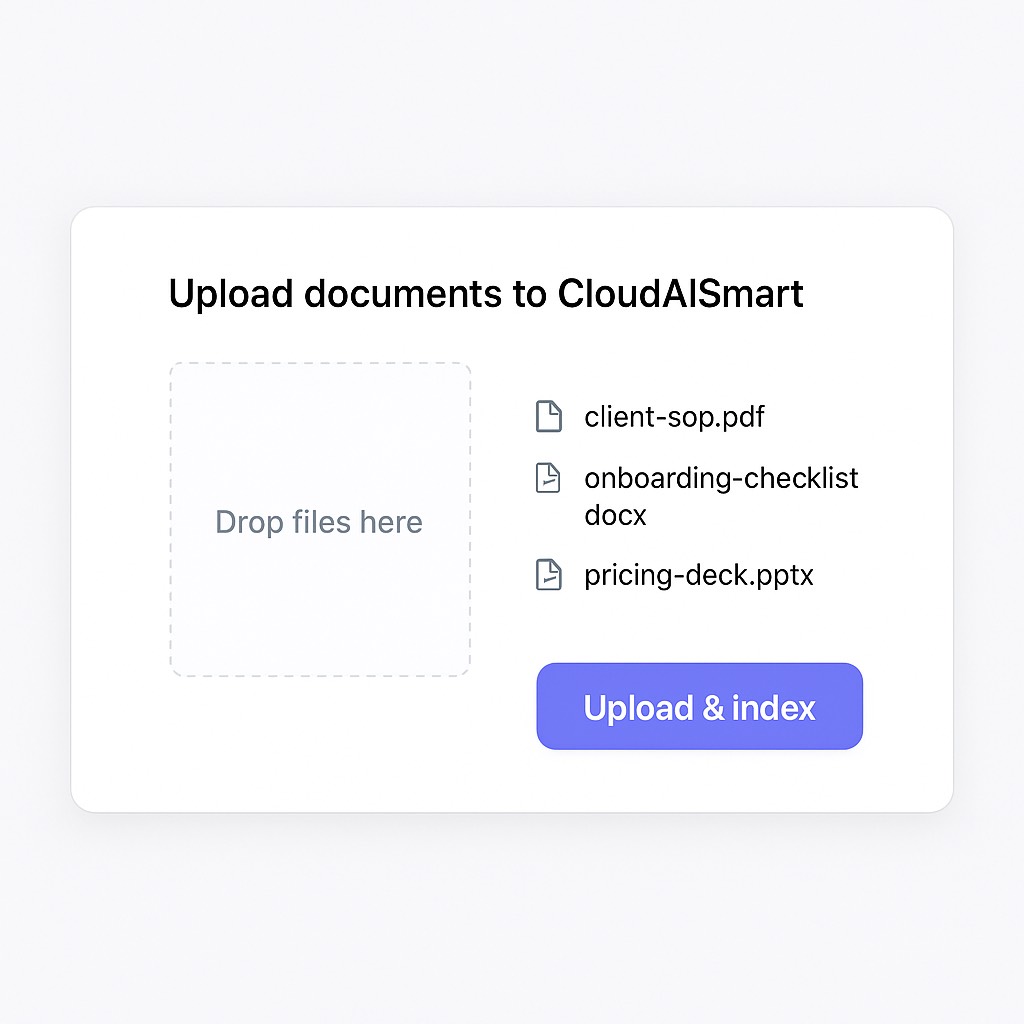 Example UI view. Replace with your own screenshot anytime.
The system builds a citation-first knowledge layer. Answers come back grounded in your docs — not generic, not guessed.
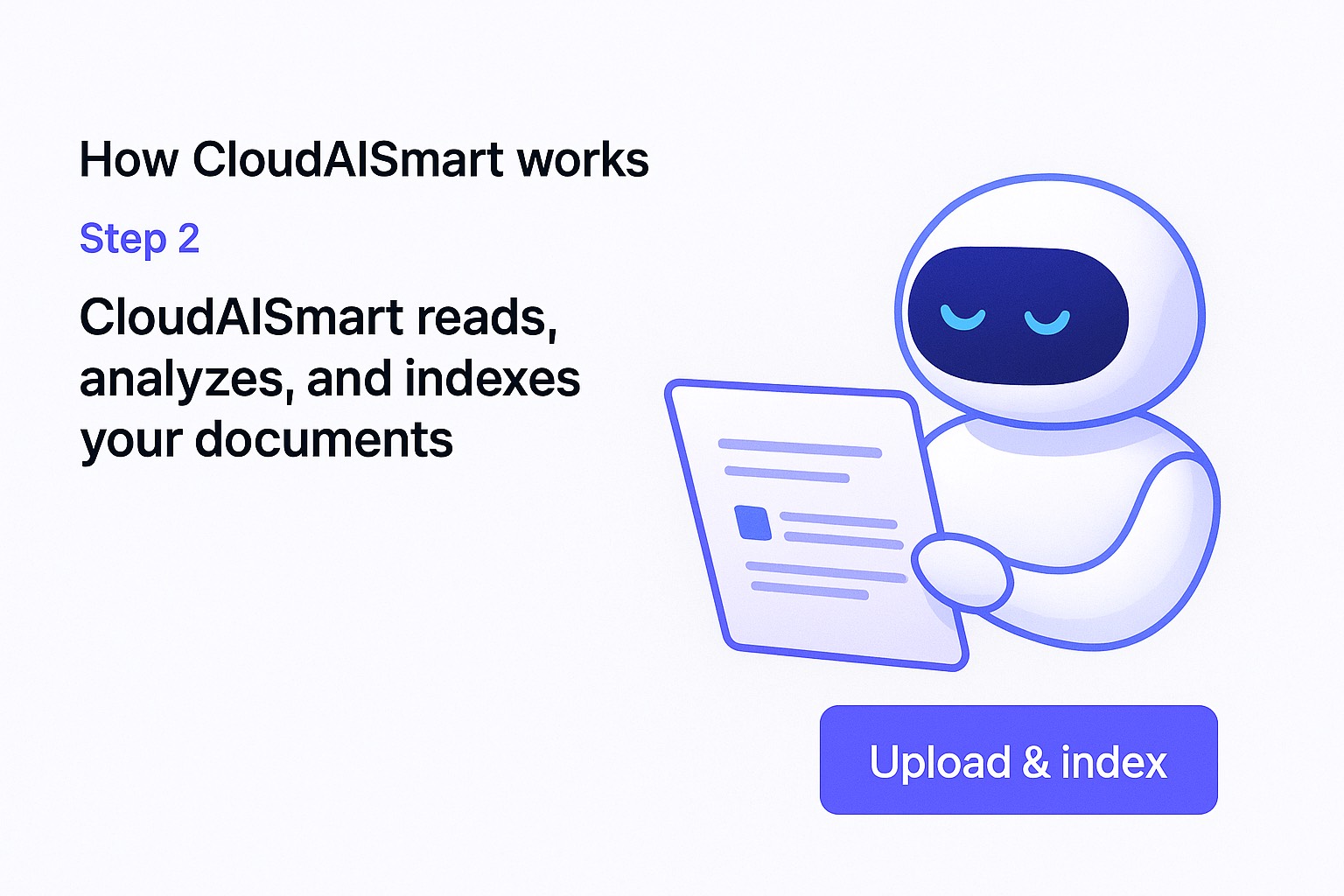 RAG tuned for internal workflows + citations.
“What do we do for this denial code?” “What’s the doc checklist for this CPT?” “What’s our appeal timeline?” Every answer cites the source section.
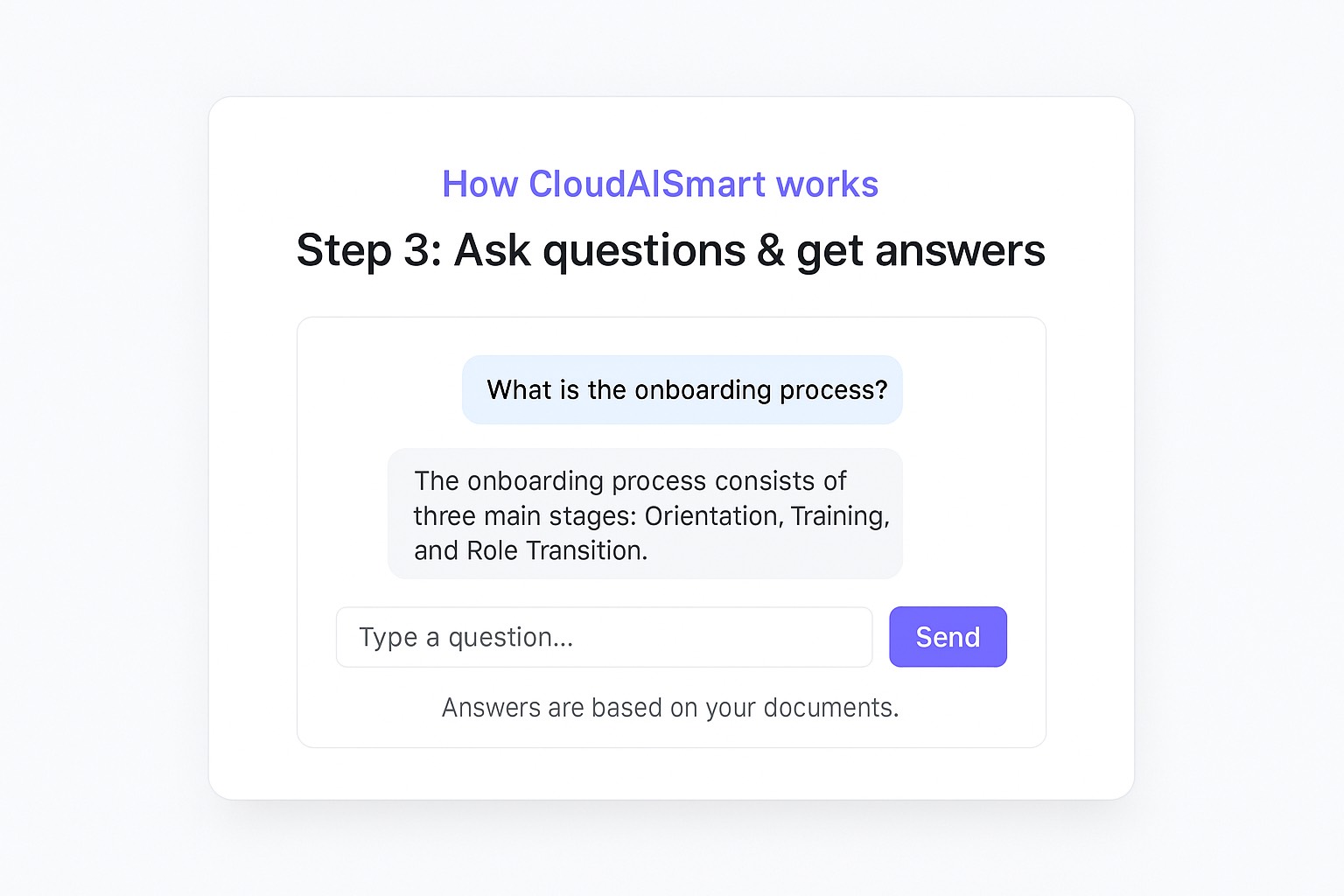 Grounded answers that point back to your approved docs.
What teams use it for every day
If your billing team repeats the same questions, hunts for the same PDFs, or re-trains the same workflows — this is where CloudAISmart pays for itself.
- Denials: “What’s our process for CO-50 / CO-97 / PR-204 denials?”
- Appeals: “What documents do we include and what’s our appeal timeline?”
- Payer quirks: “Does this payer require prior auth for this service?”
- Documentation: “What’s the checklist for medical necessity and what do we cite?”
- Workflows: “What’s the escalation path when a claim is stuck in review?”
The key: answers are grounded in your SOPs and payer notes — not a generic internet response.
- Your docs stay in your cloud environment.
- Access can be segmented by team / facility / workflow.
- Responses include citations back to source docs.
- Denials playbook / appeal templates (if you have them)
- Payer “rules” PDFs or internal payer notes
- Top 10 repeated team questions
- Any SOP docs your team lives in daily
Connect where your documents already live
CloudAISmart can ingest and sync from common sources — drives, inbox exports, knowledge bases, shared folders, and internal SOP repositories — so you don’t have to migrate everything just to get value.
- Cloud storage: Google Drive, Dropbox, OneDrive, Nextcloud — SOP folders, payer PDFs, templates.
- Email: Gmail exports / shared inbox threads (searchable precedent + payer communications).
- Knowledge: Notion / Confluence exports — playbooks, escalation guides, internal documentation.
- Chat: Slack / Teams exports — historical decisions and “tribal knowledge.”
- Media: Google Photos (optional) — screenshots, EOB examples, reference images.
- Docs: PDFs, Word, spreadsheets, checklists, scripts, policies.
On the demo, we’ll map your real doc flow (where things live today) and show the cleanest path to a private, citation-first billing assistant.
On a short call, we’ll upload a few sample files and show live Q&A with citations. You’ll see how quickly this turns payer rules, SOPs, and denial playbooks into a working billing assistant — without leaving your own cloud.